

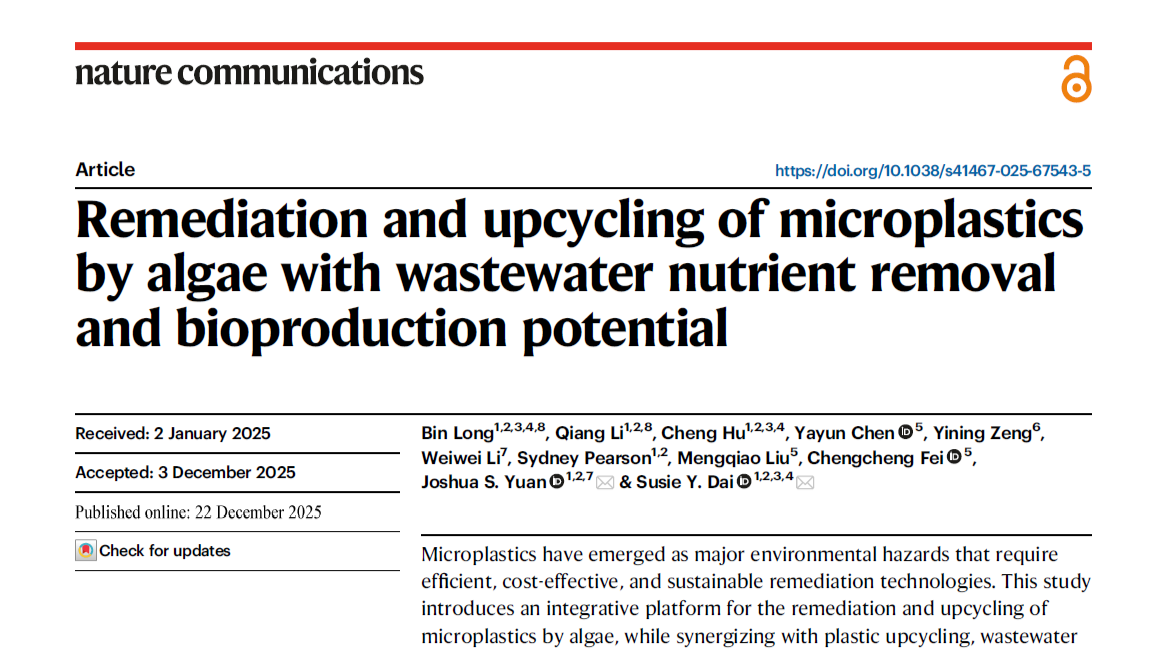
Microplastics are an escalating environmental and health concern, yet current remediation technologies remain costly, inefficient, and generate secondary waste streams. A new study published in Nature Communications presents an innovative biological platform that integrates microplastic removal, wastewater treatment, and plastic upcycling into a single system.
The approach, called RUMBA, uses engineered cyanobacteria with hydrophobic cell surfaces that rapidly aggregate with microplastics through enhanced hydrophobic interactions. The system achieved over 91% microplastic removal within one hour, significantly outperforming many existing bioremediation methods. The microplastics-enriched biomass can then be recovered easily and converted into composite materials, turning waste plastics into value-added products.
Beyond microplastic capture, the platform also demonstrates efficient nutrient uptake from wastewater and CO₂-based algal bioproduction, highlighting its potential for integration into circular bioeconomy and wastewater treatment infrastructures. By embedding captured plastics directly into biomass for co-processing, the system avoids secondary pollution risks associated with conventional filtration and flocculation techniques.
This research illustrates how synthetic biology and algal biotechnology could transform microplastic remediation from a costly environmental burden into a resource-generating process, supporting sustainable materials innovation and pollution mitigation.
Read the full paper: https://www.nature.com/articles/s41467-025-67543-5