

Türkiye’s Seas Under Watch: How the TÜBİTAK Marmara Research Center Monitors and Protects Marine Environments
Understanding the ocean begins with observing it. For countries surrounded by sea, this task is not only scientific but strategic. Türkiye is bordered by the Black Sea, the Sea of Marmara and the Aegean Sea: three very different marine environments that support fisheries, transport, tourism and coastal communities. Monitoring their health, understanding how they change and providing the scientific evidence needed for sustainable management is a long-term mission led by the TÜBİTAK Marmara Research Center (MAM).
At the heart of this mission lies a national service that quietly supports environmental policy, research and decision-making across the country: a comprehensive marine monitoring programme powered by dedicated oceanographic infrastructure and multidisciplinary expertise.
TÜBİTAK MAM undertakes the 3 years contract and thanks to the “Integrated Marine Pollution Monitoring Program” funded by the Turkish Ministry of Environment and Urbanization/General Directorate of EIA, Permit and Inspection/ Department of Laboratory, Measurement for governance & coordination.
A National Capability for Observing the Seas
Marine ecosystems are constantly changing under the combined pressures of climate change, pollution, maritime transport and coastal development. Detecting these changes requires continuous observation at sea: collecting water, sediment and biological samples, measuring environmental conditions and tracking long-term trends.
To enable this work, TÜBİTAK MAM operates the research vessel R/V TÜBİTAK Marmara, a floating laboratory designed to support oceanographic research and environmental monitoring across Turkish seas and beyond. The vessel allows scientists to reach offshore and coastal areas, conduct research cruises and gather the data needed to understand marine ecosystems in depth.
From the microscopic world of plankton to the chemical composition of sediments, the research carried out on board helps build a comprehensive picture of the state of the marine environment. These observations form the backbone of national monitoring efforts and provide a crucial evidence base for environmental management.
From Field Data to Environmental Action
The value of long-term monitoring lies in its ability to turn measurements into knowledge and knowledge into action. Data collected during research cruises are used to assess marine pollution, evaluate ecosystem health and detect emerging environmental risks.
This work supports the development and implementation of national marine environmental policies, helping authorities understand how human activities affect the sea and what measures are needed to protect it. By providing reliable and continuous scientific evidence, TÜBİTAK MAM helps bridge the gap between research and policy, ensuring that decisions affecting marine environments are grounded in data.
In this way, monitoring becomes more than a scientific activity, it becomes a public service that supports environmental protection, sustainable resource management and the well-being of coastal communities.
A Multidisciplinary Approach to Complex Challenges
Marine monitoring is inherently multidisciplinary, bringing together oceanography, chemistry, biology and environmental engineering. TÜBİTAK MAM integrates expertise from across these fields to better understand the interactions between natural processes and human pressures.
Research cruises enable scientists to investigate marine biodiversity, study ocean currents, measure pollutants and analyse ecosystem dynamics. By combining these perspectives, the centre contributes to a holistic understanding of marine environments and the challenges they face.
This integrated approach is essential in a world where environmental issues are increasingly interconnected and require coordinated responses.
Within every 3 years periods, the program is eager (or motivated) to explore innovative approaches in marine sciences such as collecting data via coastal networks, profiling buoys, ferrybox systems, passive samplers etc via in situ demonstration campaigns of various methodologies.
A Platform for Collaboration and Knowledge Sharing
The research vessel also acts as a platform for cooperation. Universities, public institutions and research organisations collaborate in field campaigns, training activities and joint projects, strengthening Türkiye’s marine research capacity and fostering international partnerships.
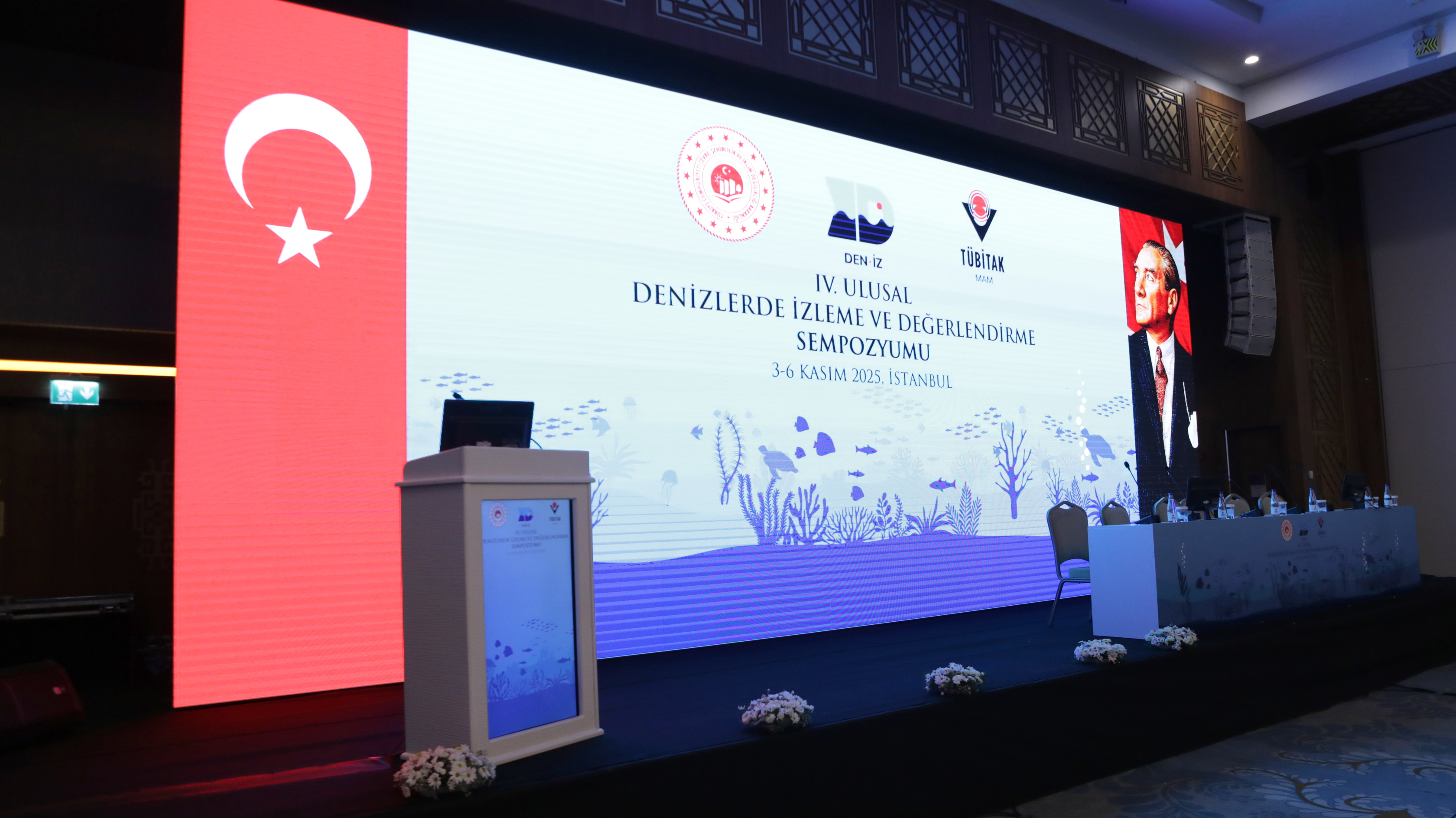
TÜBİTAK MAM cooperates with 150 Science Experts from academia and 23 research institutions resulting in a final national symposium that supports scientific growup of young generations in Marine Science.
Through these collaborations, TÜBİTAK MAM contributes to regional and European scientific initiatives, sharing knowledge and experience while supporting broader efforts to address ocean challenges collectively.
Supporting a Sustainable Relationship With the Sea
As pressures on marine ecosystems grow, the need for reliable observation and long-term scientific knowledge becomes ever more critical. By operating national marine monitoring programmes and providing advanced research infrastructure, TÜBİTAK MAM plays a key role in helping society understand, protect and sustainably use the seas surrounding Türkiye.
Through this continuous commitment to observing the ocean, the centre contributes to healthier marine ecosystems, informed policy decisions and a more sustainable blue future.