

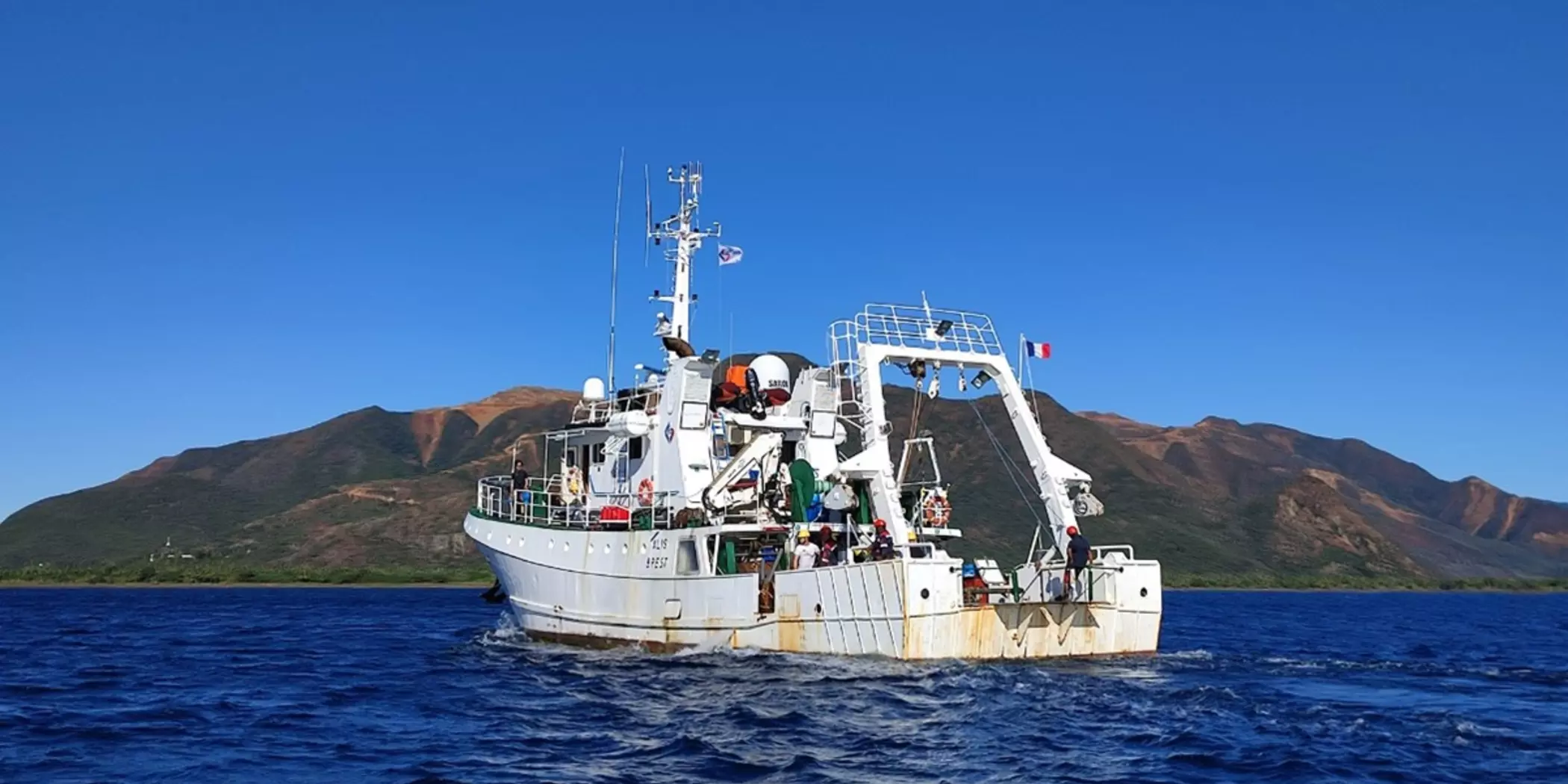
A new study published in Communications Earth & Environment shows that intensive nickel mining has significantly altered microbial biodiversity in the Thio Lagoon (New Caledonia), with effects that continue to shape the ecosystem today.
Led by scientists from Ifremer, IRD, CNRS and partner universities, the research reveals that mechanisation of mining activities in the 1950s led to a sharp increase in sediment inputs into the lagoon, triggering major changes in microbial communities at the base of the food web. Using a 2.26-metre sediment core, researchers reconstructed nearly 1,000 years of environmental history, combining geochemical, biological and ancient DNA analyses.
The results show a marked shift from the 1950s onwards, including increased sedimentation, higher metal concentrations and a strong decline in microbial biodiversity, with some sensitive species disappearing entirely. Although environmental measures introduced in the 1970s reduced direct mining inputs, erosion across the wider watershed continues to affect the lagoon ecosystem.
The study highlights the long-term impacts of land-based industrial activity on coastal environments and underlines the importance of integrated land–sea management and long-term monitoring of coastal biodiversity.
Read more and the official press release: here.
Image Credit: Robin Quéré