

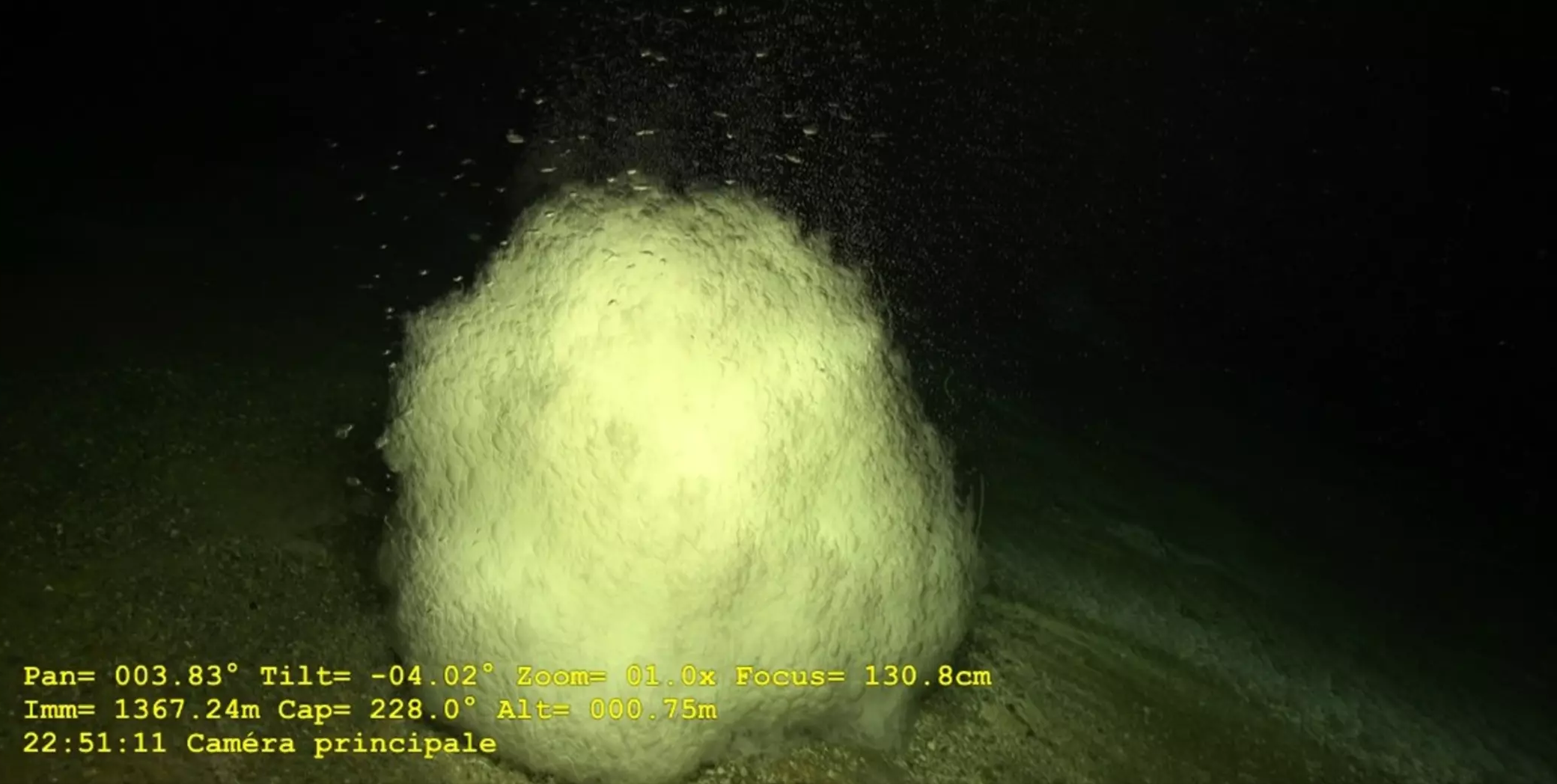
Scientists have identified more than 120 CO₂ hydrate deposits at the Fer à Cheval site off the coast of Mayotte, making it a globally unique natural laboratory for studying carbon storage processes and ocean acidification in deep marine environments.
The discovery, published in Nature Geoscience, was made during the Geoflamme expedition and involves an international team led by Ifremer and IPGP, with contributions from CNRS, CEA, NOAA and the University of Milan. The site lies at around 1,400 metres depth within an active volcanic structure linked to the Fani Maoré system.
Unlike typical marine hydrates, which are usually composed of methane, this site contains unusually stable formations of solid CO₂, forming dome-like structures that persist over time under high pressure and low temperatures. Researchers highlight the site as a rare opportunity to observe natural, transient CO₂ sequestration processes in the ocean.
The Fer à Cheval area will continue to be monitored to better understand the stability of these structures and their implications for carbon cycling and marine ecosystem responses to acidification.
Read more and the official press release: here.