

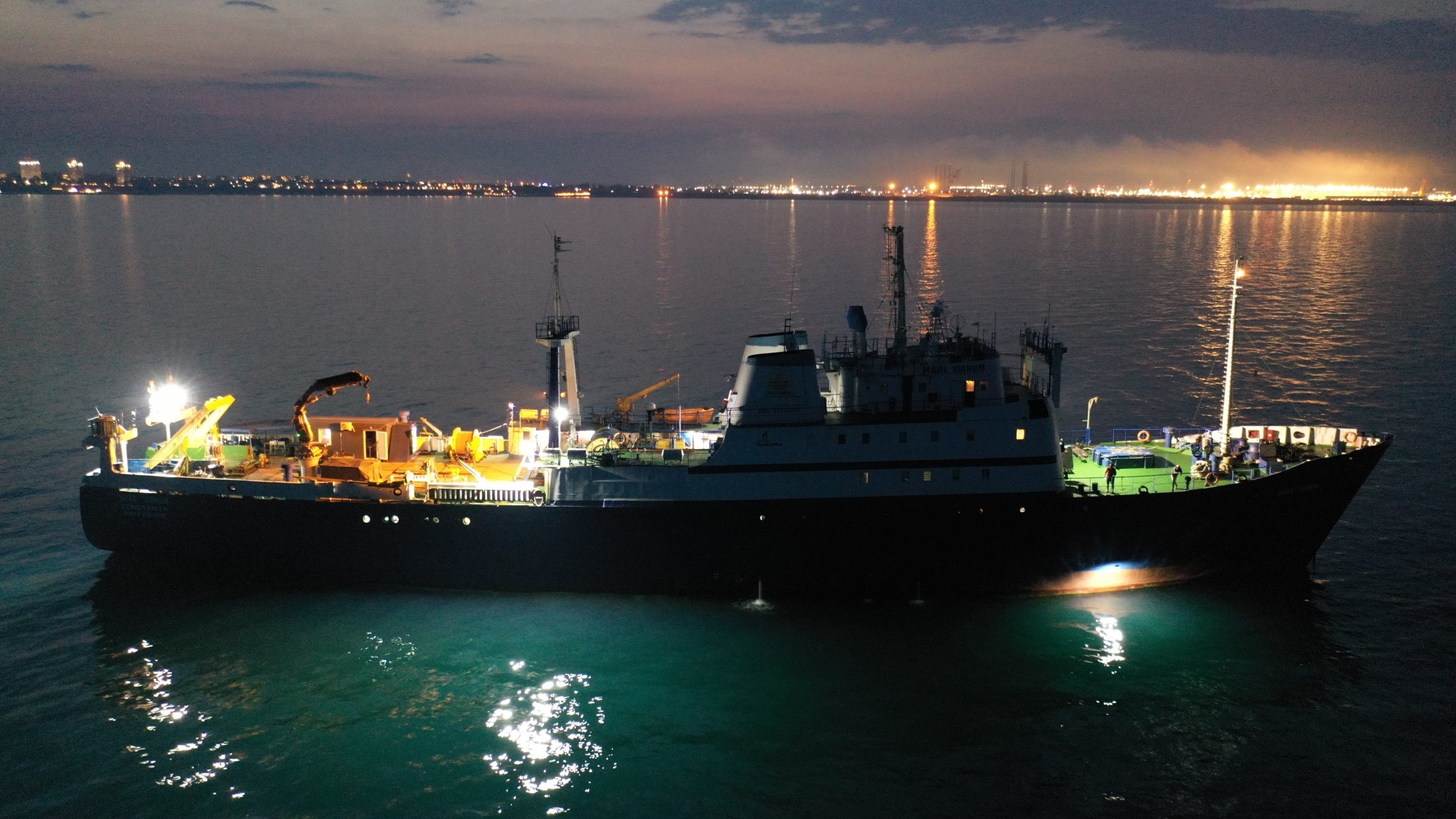
The National Institute for Research and Development on Marine Geology and Geoecology (GeoEcoMar) has successfully completed the MN294 scientific expedition, an intensive research campaign investigating the Romanian continental shelf and slope of the Black Sea.
On 2 July 2026, the research vessel Mare Nigrum returned to port, marking the successful conclusion of the expedition. Thanks to favourable sea conditions, the GeoEcoMar team achieved all planned objectives and investigated all 33 sampling stations included in the campaign.
During the expedition, researchers developed a comprehensive profile of the Black Sea environment by collecting a wide range of physical, chemical, and biological data. At each station, the team conducted in situ measurements of water physicochemical parameters, analysed greenhouse gases at the air–sea interface, and collected water samples to assess nutrients, chlorophyll pigments, total organic carbon, and various pollutants, including heavy metals, polycyclic aromatic hydrocarbons, pharmaceutical residues, and hormones.
Sediment samples were also collected for detailed sedimentological, mineralogical, geochemical, and biological analyses, including the study of benthic fauna. Together, these datasets will provide valuable insights into the current state of Black Sea ecosystems and the pressures affecting them.
The samples and data collected during the expedition are now being analysed in GeoEcoMar’s laboratories. The results will contribute to improving the assessment and prediction of the impacts of multiple environmental stressors on marine ecosystems and the services they provide.
The expedition was carried out within the project “Improving the monitoring programme of the Romanian Black Sea shelf to enhance the assessment and prediction of the impacts of multiple stressors on marine ecosystem services”, supporting efforts to strengthen long-term monitoring and understanding of the Black Sea.
Read more: here.
Photo Credit: GeoEcoMar