

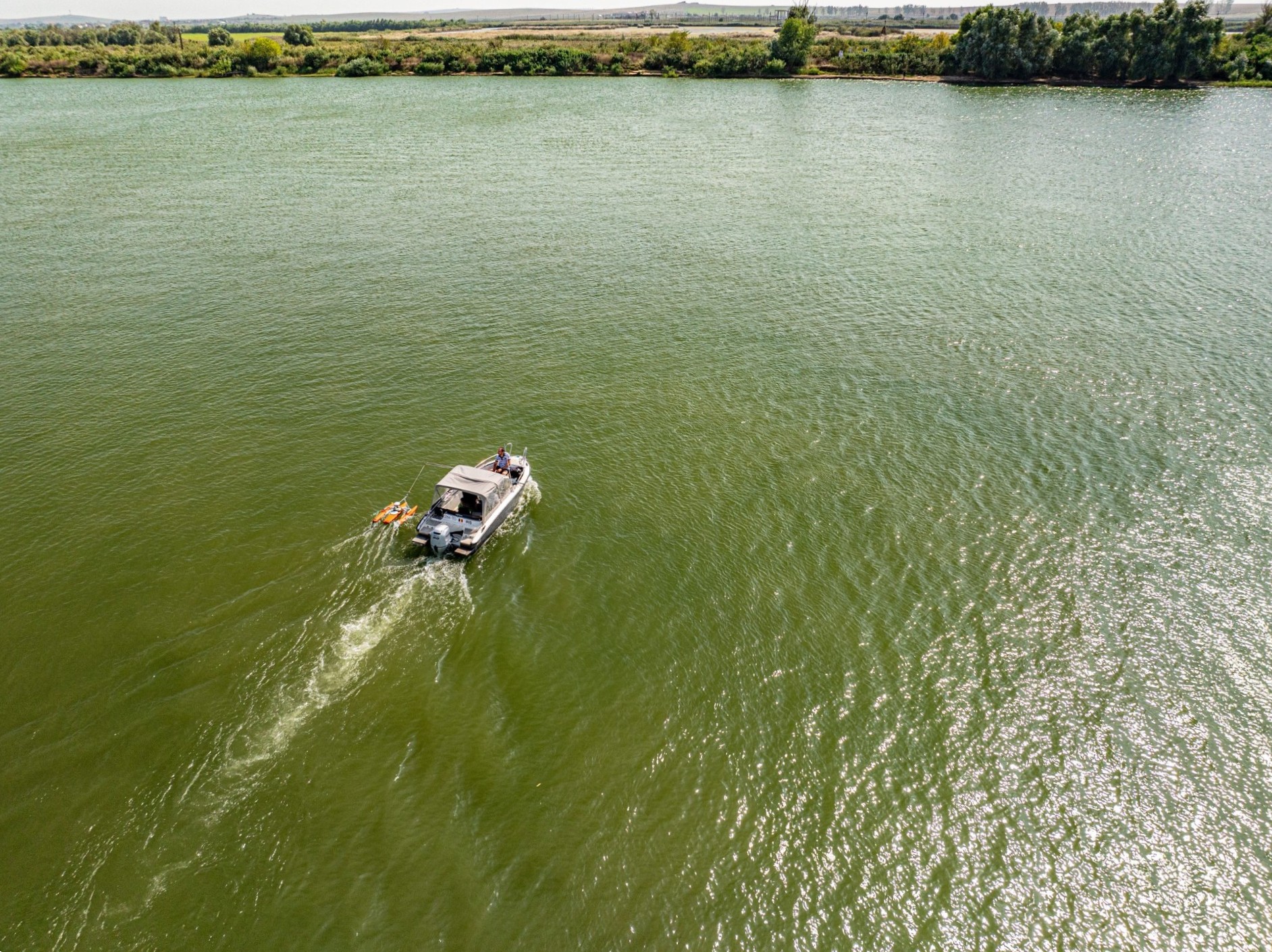
Rivers do not stop where the sea begins. Sediments, nutrients, pollutants and freshwater travel from source to coast and further to the sea as one connected system, and understanding that link is essential to protecting both. In Romania, this river-to-sea perspective is at the heart of the work of GeoEcoMar, the National Institute of Research and Development for Marine Geology and Geoecology.
Based in Bucharest and Constanța, GeoEcoMar is a national reference centre for geological, geophysical and geoecological research on marine, coastal and inland waters. Its main focus is the Danube–Danube Delta–Black Sea macrosystem, a region shaped by natural processes and increasingly by human pressures and climate change.
A Research Institute Built Around a Connected System
GeoEcoMar’s two sites complement each other. The Bucharest headquarters coordinates the institute’s scientific and administrative activity, with studies ranging from geology and geophysics to coastal research, protected natural areas and environmental impact assessments. The Constanța branch, on the Black Sea coast, hosts the National Centre for Monitoring and Alerting for Marine Natural Hazards and leads work on marine resources, geochemistry, oceanography and marine ecology.
Together, these teams cover a wide range of disciplines. Geologists study the sediments at the interface between water and the sea bottom. Marine biologists analyse samples under the microscope to understand seabed communities. Gravimetry and magnetometry specialists measure geophysical fields, work that has allowed to understand the deeper structure of the marine basin, but also revealed wrecks in virous parts of the Black Sea through magnetic anomalies. Meanwhile, the dynamic Romanian shores, with their sandy beaches, are observed in ordee to understand their evolution under the impact of human activities and a changing climate.
Mare Nigrum: A Floating Laboratory
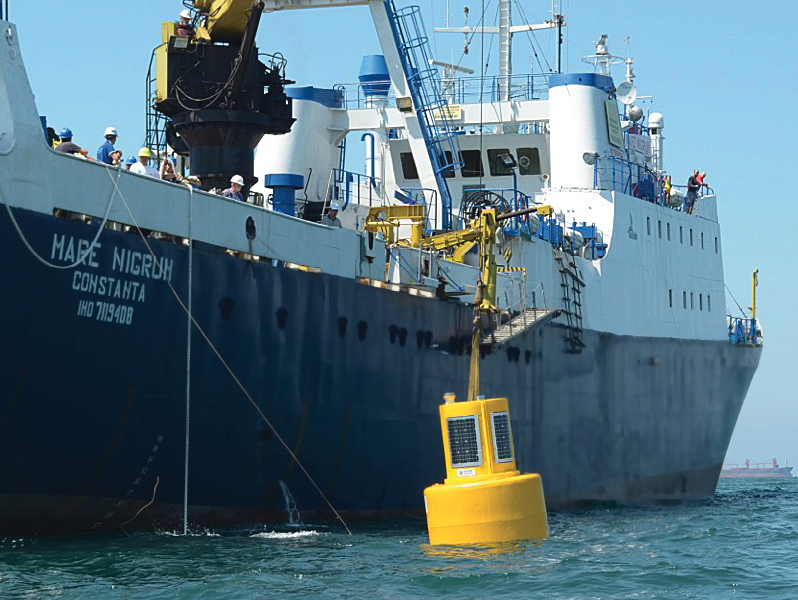
Much of this work at sea is carried out from Mare Nigrum, described as the largest operational marine research vessel in the Black Sea and GeoEcoMar’s main platform for scientific work there. On board, teams collect bottom sediments with gravity and multi corers, retrieve biological samples and deploy sampling equipment, gathering the evidence needed to understand the state of the sea. Designated a research infrastructure of national interest, Mare Nigrum has completed more than 240 scientific expeditions since 2004, giving GeoEcoMar a sustained operational presence across the entire Black Sea.
Mare Nigrum is only one part of a wider source-to-sea research system. GeoEcoMar also operates the river and coastal research vessel Istros and the Halmyris laboratory houseboat in the Danube Delta, allowing research to follow environmental processes from river channels and wetlands to the open Black Sea.
The Danube Delta as a Natural Laboratory
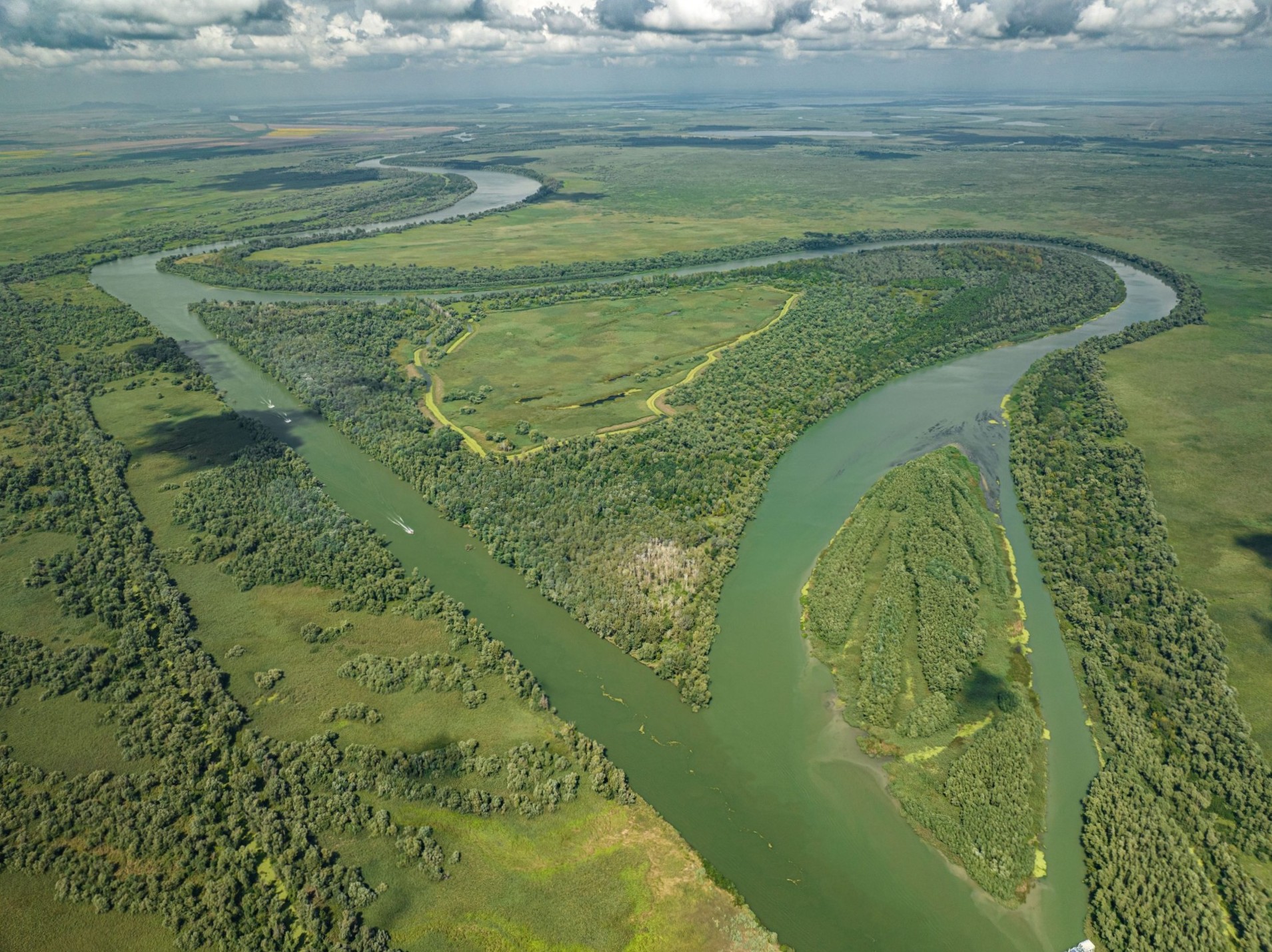
Natural interface between the Danube and the Black Se, the Danube Delta serves as what GeoEcoMar calls a true “natural laboratory” for geological and geoecological research. Pressure from human activity and global climate change affects its aquatic ecosystems, making long-term observation especially valuable.
This expertise is increasingly part of public debate. In a recent media interview, GeoEcoMar researcher Albert Scrieciu drew attention to the less visible consequences of falling water levels on the Danube, a river that crosses 10 countries but gathers its tributaries from a hydrgoraphic basin covering 19 states. This expertise is also central to DANUBIUS-ERIC, the European research infrastructure dedicated to river-sea systems. Formally established in 2025 with Romania as coordinating state, it has been developed with GeoEcoMar support, as well as numerous partners from Romania and another 11 countries.
Bringing Ocean Knowledge to Society
GeoEcoMar’s mission goes beyond producing data. In 2026, Romania joined the IOI Ocean Academy network, an initiative of the International Ocean Institute recognised within the UN Decade of Ocean Science for Sustainable Development. IOI Ocean Academy Romania is coordinated by Teodor Mușat of GeoEcoMar and Cristina Ciobotariu of AECP.
Its first course, a free online programme in Romanian on protecting coastal and marine ecosystems for a sustainable blue economy, ran from 24 July to 9 August 2026. Topics included ocean literacy, Black Sea governance, pollution, sustainable fisheries, coastal tourism, coastal erosion and marine protected areas. Speakers came from research, NGOs and public institutions, reflecting the idea that ocean knowledge should reach students, professionals and citizens alike. More courses are planned.
International Visibility and Collaboration
GeoEcoMar’s researchers are also active on the international scene. In September 2026, teams took part in the World Multidisciplinary Earth Sciences Symposium (WMCEES) and the Congress of the Carpathian-Balkan Geological Association (CBGA), sharing results and building partnerships. That conference presence is backed by sustained European project work: GeoEcoMar contributes to initiatives such as DOORS, BRIDGE-BS, AQUARIUS, EMODnet and DANUBE4all, connecting its expertise to marine data, research-infrastructure access, Black Sea resilience and restoration across the Danube basin.
Strengthening the EurOcean Network
GeoEcoMar has been a EurOcean member since February 2007. In 2010, it hosted EurOcean’s 10th Steering Committee and Foundation Board meetings in Romania, with its Bucharest facilities, Black Sea research capacity and Danube Delta field infrastructure forming part of the exchange. That history gives today’s collaboration a strong institutional foundation.
For the EurOcean community, GeoEcoMar is a reminder that ocean science does not begin at the shoreline. By combining marine geology, geophysics, ecology and river-sea research with monitoring, education and international cooperation, it contributes to the integrated, science-to-society approach that EurOcean promotes across Europe.
This profile also maps closely to EurOcean’s OCEAN30 priorities: monitoring and participation in European data and research-infrastructure initiatives strengthen access to marine information; DANUBIUS and international projects foster collaboration; the IOI Ocean Academy supports the democratisation of science; and GeoEcoMar’s vessels, laboratories and applied geoscience expertise create opportunities for blue innovation and technology access. GeoEcoMar therefore illustrates the member-driven, source-to-sea cooperation that EurOcean aims to scale across Europe.