

The Horizon Europe project brings together 14 partner organisations to develop an integrated toolbox for monitoring, assessing and addressing plastic pollution across the land-to-ocean continuum.
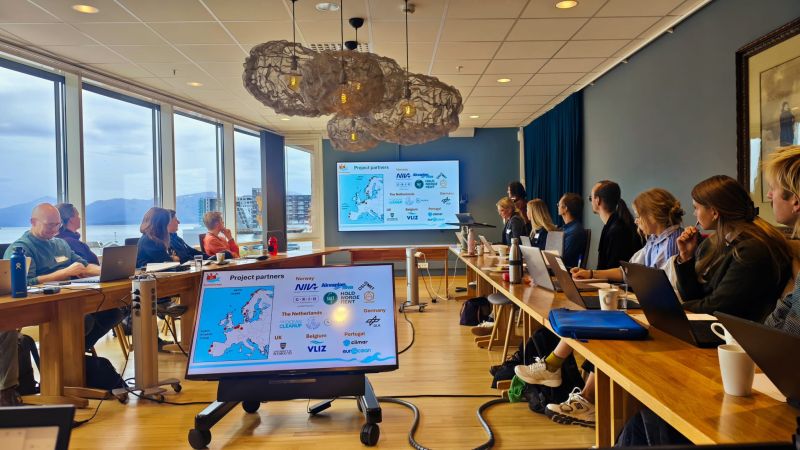
On 24–25 September 2026, the TOOLS4OCEAN consortium gathered in Tromsø, Norway, for its official kick-off meeting, marking the start of a four-year collaboration to develop innovative tools and solutions to tackle plastic pollution from land to ocean.
Coordinated by the Norwegian Institute for Water Research (NIVA), TOOLS4OCEAN brings together 14 partner organisations with expertise in marine and environmental research, Earth observation, technology development, plastic pollution prevention and removal, stakeholder engagement, policy and communication. The meeting provided an opportunity for partners to align on the project’s objectives, strengthen collaboration across work packages and establish a shared framework for the work ahead.
Developing an Integrated Toolbox
Funded by the European Union’s Horizon Europe programme, TOOLS4OCEAN aims to improve understanding of the sources, pathways and impacts of plastic pollution across aquatic and marine environments. The project will develop an integrated decision-support toolbox combining monitoring approaches, datasets, models, hotspot mapping, validated technologies and practical intervention tools.
The toolbox will help users identify where plastic pollution originates, understand how it travels through rivers and coastal areas to the ocean, locate pollution hotspots and assess which interventions may be most effective. By bringing together scientific knowledge and practical solutions, the project aims to support more informed decision-making and strengthen efforts to prevent and reduce plastic pollution.
From Scientific Knowledge to Practical Action
Making the project’s results accessible and useful to those working on the ground is a central part of TOOLS4OCEAN. Public authorities, municipalities, basin managers, researchers, businesses, technology providers, policymakers, civil society and local communities will all have a role in shaping, testing and applying the solutions developed.
The project will work through four pre-selected use cases and three replication regions, allowing the toolbox to be co-designed, validated and adapted to different environmental and geographical contexts. This approach will help connect monitoring and assessment capabilities with the needs of those responsible for managing plastic pollution and implementing effective interventions.
EurOcean's Role in TOOLS4OCEAN
As a project partner, EurOcean contributes to communication, dissemination and stakeholder engagement activities. These efforts aim to raise awareness of plastic pollution challenges, increase the visibility and accessibility of project results, and promote the uptake of the innovative tools and solutions developed throughout the project.
The kick-off meeting in Tromsø marks the beginning of this collaborative effort. Over the next four years, the consortium will work towards a shared goal: providing better tools and evidence to support more effective action against plastic pollution, from land to ocean.
TOOLS4OCEAN is funded by the European Union under the Horizon Europe programme