

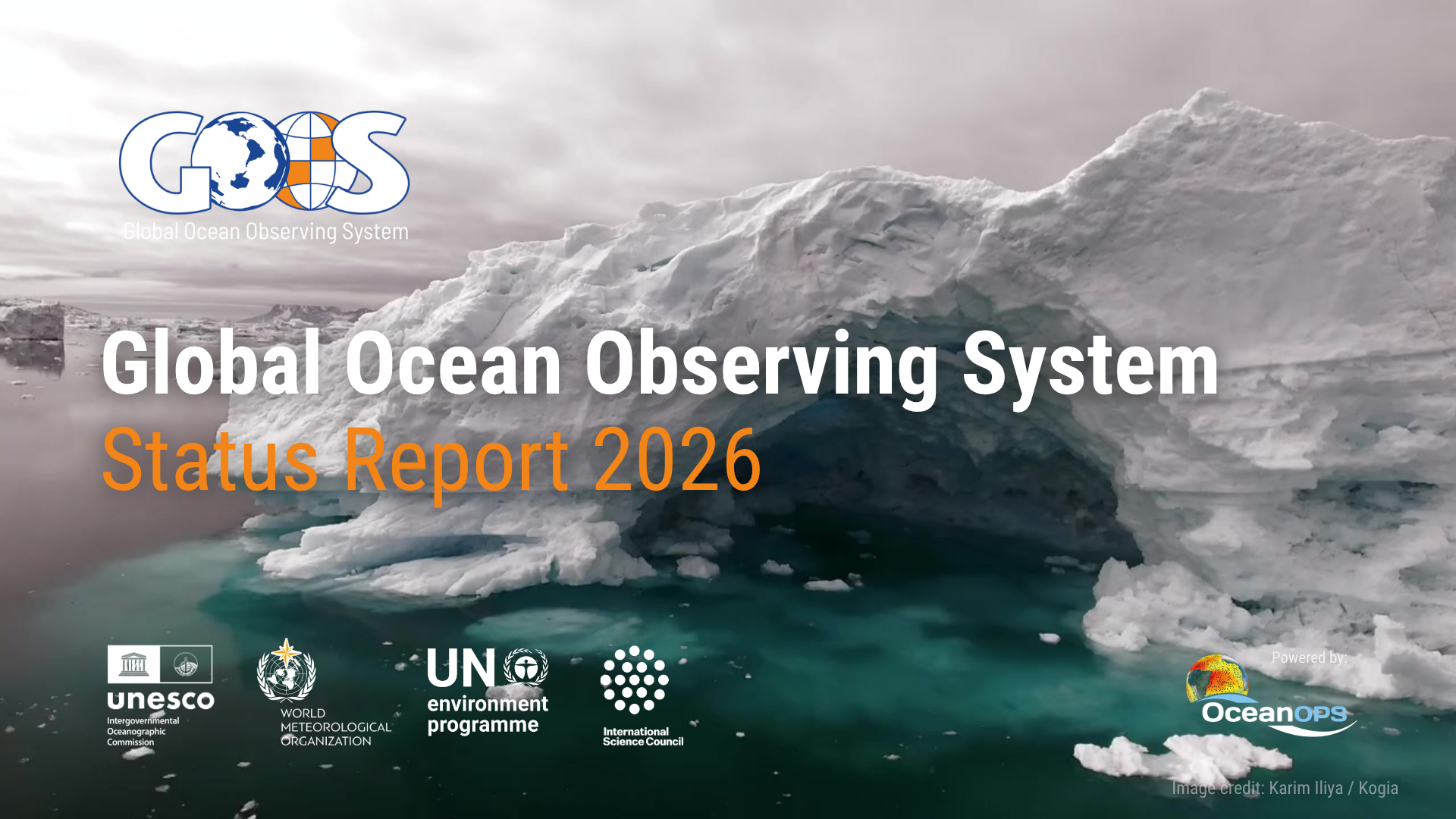
The Global Ocean Observing System Status Report 2026, released on 5 November, provides an overview of the latest progress in global ocean observing, highlighting the importance of sustained monitoring, international cooperation and continued investment.
Led by the Intergovernmental Oceanographic Commission of UNESCO, GOOS coordinates international efforts to strengthen a globally integrated and resilient ocean observing system. Its operational centre, OceanOPS, jointly supported by the IOC and the World Meteorological Organization, monitors the status and performance of global ocean observing networks.
The 2026 report highlights the contributions of 67 countries to physical and biogeochemical observations through 17 GOOS observing networks. Combined with satellite measurements and other initiatives monitoring marine life and ecosystems, these observations provide essential information for weather forecasting, climate monitoring, coastal risk management, biodiversity conservation and sustainable ocean economies.
Despite this progress, significant challenges remain. Ocean observing capacity is unevenly distributed, with many networks facing difficulties securing long-term funding. Important gaps persist in the Southern Ocean, polar regions, the deep ocean, marginal seas and coastal areas, particularly in developing countries and Small Island Developing States (SIDS). The report stresses the need for stronger investment, improved coordination and broader international participation to ensure a more comprehensive and sustainable observing system.
Alongside the latest network updates and statistics, the interactive report showcases examples of how ocean observations support climate monitoring in polar regions, help Pacific communities build resilience to rising sea levels, and contribute to coral reef monitoring and restoration. It also introduces a new International Alliance to support and strengthen GOOS, led by the European Union and Canada.
Read the report: here.